


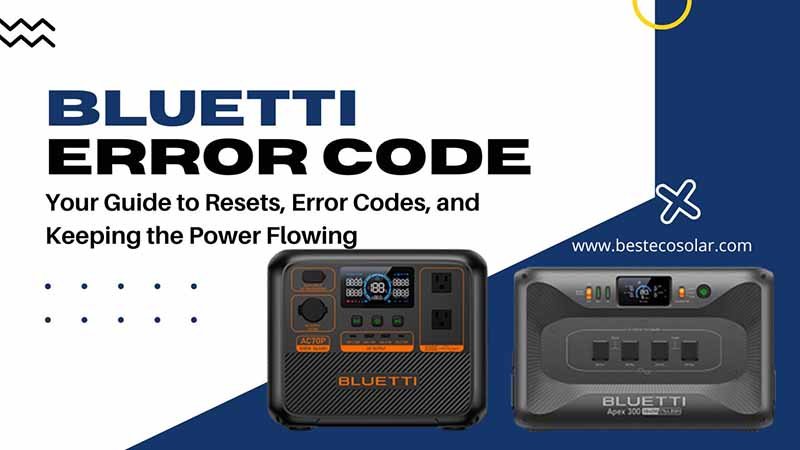
Bluetti Error Code: Troubleshooting Unplugged – Your Guide to Resets, Error Codes, and Keeping the Power Flowing
A Bluetti Error Code is a diagnostic message displayed by a Bluetti portable power station when it detects an issue such as overheating, overload, charging faults, battery protection, or inverter problems. Each code helps users quickly identify the cause and apply the appropriate solution.
Seeing a Bluetti Error Code on your power station can be frustrating, especially during a camping trip or a home power outage. Fortunately, most Bluetti error codes indicate specific issues that can be diagnosed and resolved in just a few minutes. In this complete guide, you’ll learn what every Bluetti Error Code means, common causes, step-by-step fixes, and when it’s time to contact Bluetti support.
Let’s be real for a second. You bought a Bluetti power station to eliminate stress—to keep the lights on during a storm, to brew coffee in the wilderness, to know you’ve got a backup when the grid goes wobbly.
So when the thing itself starts flashing weird codes, refusing to charge, or shutting down like it’s got a mind of its own, the frustration is… profound. It’s like your trusty guard dog deciding to take a nap right when you need it most.
I’ve been there. I’ve spent countless hours testing these units in the field, from the compact EB series to the beastly AC200P and beyond. I’ve seen them perform heroically and, on rare occasions, throw a tantrum. This guide isn’t just a rehash of the manual. It’s a compilation of hard-won knowledge, common-sense fixes, and a few “inside baseball” tips to get your portable power back on track.
When Your Bluetti Acts Up: The Ultimate Troubleshooting Mindset
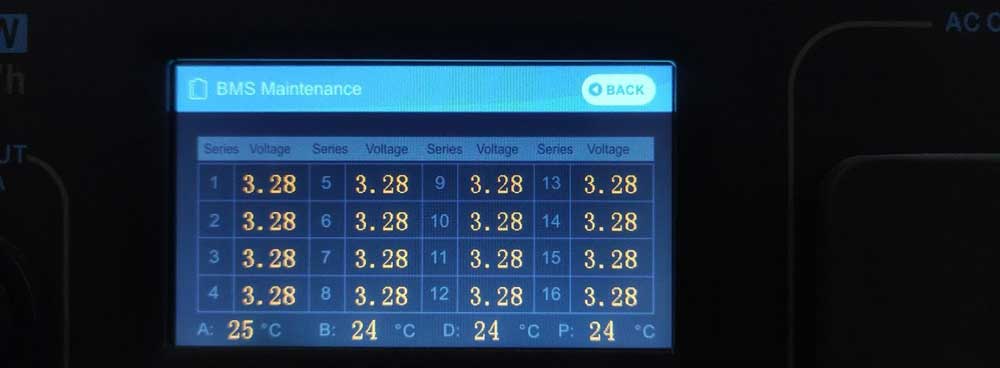
If your Bluetti power station just flashed a Bluetti error code on its screen, don’t panic — nearly every Bluetti error code is the unit’s battery management system (BMS) protecting itself, not a sign your power station is broken. This guide covers every documented Bluetti error code, what it actually means, and the exact steps to clear it, based on Bluetti’s official support documentation and confirmed fixes from the Bluetti owner community.
Before we dive into button combos and Bluetti Error Code, we need to get into the right headspace. Think of your Bluetti not as a magical black box, but as a brilliant but sensitive partner. It’s constantly monitoring voltage, temperature, and current. When something outside its comfort zone happens, it doesn’t break—it protects itself. Our job is to figure out what it’s protecting itself from.
How Bluetti Error Codes Work
Bluetti error codes appear as a short alphanumeric readout on your unit’s display — usually a letter (“E”) followed by two or three digits, though some models (like the AC300/AC500 series) use a “6-01” style format instead.
Each Bluetti error code maps to a specific protection trigger inside the BMS: temperature, voltage, current, or a communication fault between the battery and the main control board. When a Bluetti error code appears, the unit has intentionally shut down or limited output to prevent damage — it is a safeguard, not a failure.
1. The First Rule of Troubleshooting: Don’t Panic, Power Cycle
You’d be amazed at how many “problems” are just temporary glitches—digital hiccups. Before you envision a costly repair, always start with the electronic equivalent of a deep breath.
The Universal Power Cycle (Your First Move):
- Turn the Bluetti unit OFF using its main power button.
- Disconnect everything: solar panels, AC wall charger, car cable, and any devices plugged into it.
- For units with a separate DC button or switch, turn that off too.
- Now, here’s the part many miss: Wait. Leave it completely alone for at least 5-10 minutes. This allows the internal capacitors to fully discharge and the BMS (Battery Management System) to completely reset.
- After the wait, turn it back on. Reconnect your input (charger) first, then your output (devices).
If that doesn’t work, it’s time for more targeted action.
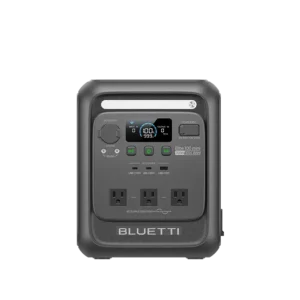
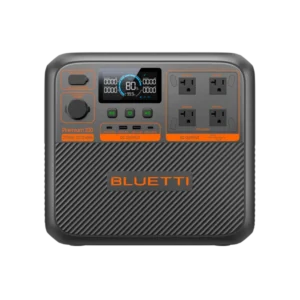
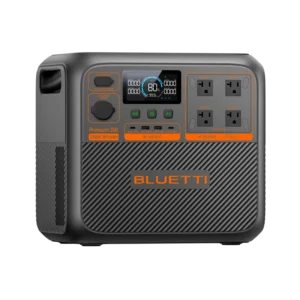
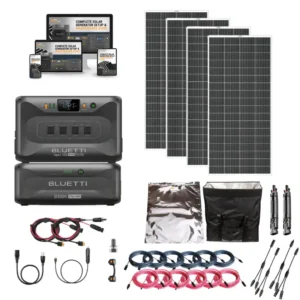
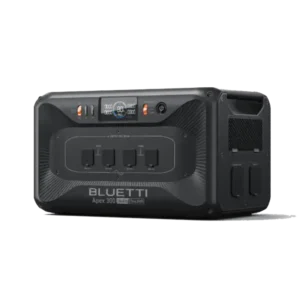
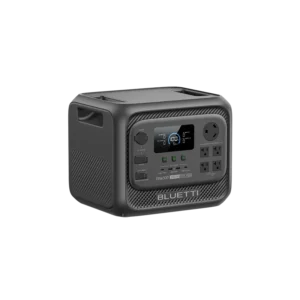
Bluetti Error Code: The Art of the Reset (From Soft Refresh to Nuclear Option)
“Reset” can mean many things. Let’s break down the types, from gentle to drastic.
1. How to Reset Your Portable Power Station (The Soft Reset)
This is what we did above. It’s the baseline. It clears temporary runtime errors. If your unit is acting sluggish or a port isn’t responding, this is step one.
2. How to Force a Factory Reset on Your Bluetti
When a soft reset fails or you’re dealing with persistent, weird behaviour, a factory reset is your escalation. This returns all settings to出厂默认 (factory defaults). Crucial Note: This does not typically recalibrate the battery percentage meter (that’s a different, often lengthy process). But it clears custom settings and can resolve software conflicts.
General Factory Reset Method (Model Variations Apply):
- Ensure the unit is ON.
- Press and hold the DC button and the Power button simultaneously. (On some models like the AC200P, it might be the “Light” button and the Power button—always check your manual first!).
- Keep holding for 5-10 seconds until you see all the lights on the control panel flash or the screen goes blank and reboots.
- Release the buttons. The unit will restart as if it were new.
Case Study Time: I once had an EB3A that would only charge to 98% and then stop. No error codes. A soft reset did nothing. A factory reset made it forget its odd charging habit, and it happily went back to 100%. The culprit? Likely a minor firmware hiccup in its memory.
3. Specific Spotlight: How to Reset a Bluetti AC200P
The AC200P, a legend in its own right, has a specific quirk. Its factory reset is famously performed by pressing and holding the “Light Button” and the “Power Button” together for about 5 seconds until the screen resets. Remember, disconnect all inputs and outputs first!
4. What About a Reset With Just the Power Button?
Some newer models incorporate a “long-press” function on the main power button for a reset. For example, on some AC series units, holding the power button for 10-15 seconds (much longer than just turning it on/off) can force a hard reboot. This is model-specific, so when in doubt, the two-button combo is your best bet.
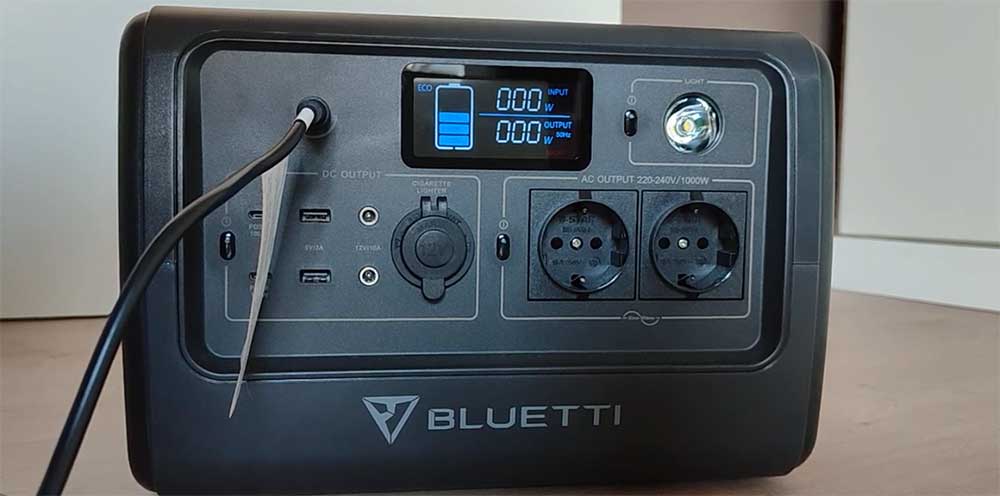
Decoding the Drama: Understanding Bluetti Error Codes
Those little letters and numbers flashing on the screen are your Bluetti’s way of crying for help. Let’s translate.
1. What Are System Error Codes?
Think of them as the “check engine” light for your power station. They’re pre-programmed alerts from the BMS or main controller indicating a specific fault condition. They’re not the end of the world; they’re a starting point for diagnosis.
2. Common Bluetti Error Codes and What They Really Mean
- E01, E02, E03 (Over-temperature, Low-temperature, General Temp Error): Your Bluetti is too hot or too cold. It will shut down to protect its battery. Solution: Move it to a shaded, ventilated area (for heat) or a warmer location (for cold). Never charge a freezing-cold battery.
- E04 / E05 (Overcurrent / Short Circuit): Something you plugged in is drawing too much power too fast, or there’s a short. Solution: Unplug all devices. Reset the unit. Plug devices back in one by one to find the culprit.
- E06 (Over-voltage): The input voltage (likely from solar panels) is too high. Solution: Check your solar panel configuration. Are your panels in series exceeding the unit’s max Voc (open-circuit voltage)? Reconfigure them in parallel.
- EC / E0 Error (Communication Error): This is a big one. It typically means the main control board can’t talk to the BMS. Can you fix an EC error yourself? Sometimes. Try a full factory reset with everything disconnected. If it persists, it often points to an internal hardware fault. One pro tip: On some models, ensuring the DC input cover is fully sealed and the ports are clean can help, as moisture can cause communication issues.
3. The 400 vs. 500 Error Analogy (And The Most Common One)
This was a clever part of your question! While web server errors (404, 402) don’t apply directly, the principle is similar.
- *400-level errors* would be like user/client errors—things you can fix. (E04 Over-current: You plugged in a too-powerful device. E06 Over-voltage: your solar setup is wrong.
- *500-level errors* would be like internal server errors—problems inside the Bluetti itself. (Persistent EC codes, internal battery cell failures).
- The most common error? In my experience, it’s temperature-related (E01/E02) and overcurrent (E04), almost always from the user environment or device overload.
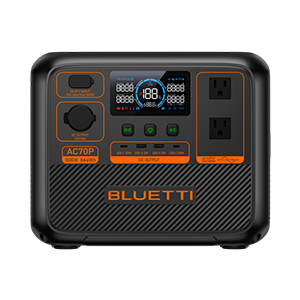
4. Bluetti Error Code
| Common Bluetti Error Code | ||
| Error Code | Description | Troubleshooting |
|---|---|---|
| E001 | Inverter overload | Check if the power consumption of your devices is too high. Reduce the load if necessary. |
| E002 | Temperature protection | Check if any of your devices are overheating. Allow them to cool down before use. |
| E003 | Inverter short circuit | Check if the power consumption of your devices is too high. Reduce the load if necessary. |
| E004 | Output failure | Ensure the output voltage is within ±10% of the rated voltage or a proper grid connection. |
| E016 | Fan failure | Check if the fan is blocked, unplugged, or not functioning properly. Ensure proper ventilation. |
| E033 | PV overvoltage | Make sure the PV input voltage is within the range of 12V to 28VDC |
| E065 | Cigarette lighter output short circuit | Check if the power consumption of your devices is too high. Reduce the load if necessary. |
| E068 | Cigarette lighter output overtemperature | Wait for the device connected to the cigarette lighter port to cool down |
| E085 | The charging temperature is too high | Wait for the unit to cool down before charging |
| E086 | The charging temperature is too low | Make sure the unit is placed in an ambient temperature of 0℃-40℃ (32°F-104°F) |
| E087 | The discharging temperature is too high | Wait for the unit to cool down before discharging. |
| E088 | The discharging temperature is too low | Make sure the unit is placed in an ambient temperature of 0℃-40℃ (32°F-104°F) |
| E113 | Grid overvoltage | Check if the grid voltage is too high. Contact your local power provider if necessary. |
| E114 | Grid undervoltage | Check if the grid voltage is too low. Contact your local power provider if necessary. |
| E115 | Grid overfrequency | Check if the grid voltage is too low. Contact your local power provider if necessary.</td |
| E116 | Grid underfrequency | Check if the grid voltage is too low. Contact your local power provider if necessary. |
| E117 | Grid oscillation | Disconnect the grid input and contact BLUETTI support for further assistance.</t |
| Others | / | Please contact BLUETTI support for assistance |
2. Complete Bluetti Error Code List (updated 2026)
| Bluetti Error Code | What It Means | Likely Cause | Fix |
|---|---|---|---|
| E01 / E02 / E03 | Over-temperature / low-temperature / general temp error | The unit is too hot or too cold | Move to a shaded, ventilated area (heat) or warm location (cold); never charge a frozen battery |
| E04 / E05 | Over-current / short circuit | A connected device is drawing too much power, or a wiring short | Unplug all devices, restart, and reconnect one at a time to isolate the culprit |
| E06 | Over-voltage (solar input) | Solar panels wired in series exceed the unit’s max Voc | Reconfigure panels in parallel or reduce the series string length |
| 001 / E013 | Inverter overload | Connected load exceeds rated output | Reduce the number/wattage of connected devices |
| 002 | Inverter over-temperature | Inverter running too hot | Power down, relocate to a cooler, ventilated spot |
| 004 | DC output short circuit/output failure | Short at DC output or overheat protection during discharge | Disconnect DC loads, inspect cabling, restart |
| 005 | PV over-voltage / battery under-temperature | Solar input voltage is too high, or the battery is too cold | Check panel configuration; warm the unit before charging |
| 006 | PV under-voltage | Solar input voltage too low for MPPT to engage | Check panel wiring and sunlight conditions |
| 007 / 008 | Over-temperature (internal) | Internal component overheating | Disconnect the load, let the unit rest before resuming use |
| E013–E016 | Input errors (solar/AC) | E013/E014 = high/low solar voltage, E015 = solar overload, E016 = AC charger failure | Verify panel and charger specs match unit’s rated input |
| E028 | Fan error | Cooling fan malfunction or dust blockage | Clean vents; contact support if fan doesn’t spin on restart |
| 6-01 to 6-04 | AC charging/output fault (AC300/AC500 series) | AC frequency mismatch or circuit issue | Match AC output frequency in settings; check breaker |
| 011 / 012 | Bus voltage high | Internal voltage regulation fault, often reported on AC300+B300 | Power cycle; contact Bluetti support if it recurs on every charge |
| 041 / 042 / 043 | BMS over-voltage / communication fault | BMS can’t validate battery state, common in cold weather | Warm the unit to room temperature before charging; factory reset if it persists |
| EC / E0 | Communication error | The main control board can’t communicate with the BMS | Full power cycle; if unresolved, this typically requires a support ticket |
Codes vary slightly by model (AC200P, AC200MAX, AC300, AC500, Apex series). Always cross-check against your unit’s manual for model-specific numbering.
Solving The Big Three: Charging, Shutting Off, and Lifespan
1. Why Is My Bluetti Not Charging?
This panic-inducer usually has a logical cause.
- Source Issue: Is your wall outlet live? Is your solar panel in full shade? Test with a known-good charger.
- Input Limits: Are you trying to charge with a car adapter while the engine is off? The voltage might be too low. Try with the engine running.
- Temperature Lockout: If the battery is below 32°F (0°C) or above 113°F (45°C), charging is disabled for safety.
- Battery Passivation: If stored for months at 100% or 0%, the BMS can go into a deep sleep. Fix: Leave it plugged into AC power for 24+ hours. The trickle current can sometimes wake it up.
2. Bluetti Error Code: Why Does My Bluetti Keep Shutting Off?
It’s protecting itself. The usual suspects:
- Overload on Startup: Devices like refrigerators and compressors have a “surge” power that can be 3x their running wattage. Your 500W fridge might surge to 1500W on startup, tripping the overload protection.
- Low Battery Voltage: Even if the display says 20%, under a heavy load, the battery voltage can sag temporarily below the BMS cutoff point, causing a shutdown. Solution: Reduce the load or recharge.
- Overheating: Is it sitting in a box or under a blanket while powering a heavy load? Give it air!
- Does Bluetti turn itself off? Yes! If no load is detected for a set period (often 4-12 hours, configurable on some models), it will auto-shutdown to conserve battery. This is a feature, not a bug.
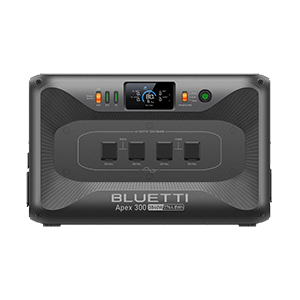
3. The Lifespan Talk: Can You Overcharge a Bluetti?
Bluetti Error Code – This is where your expertise is critical. No, you cannot “overcharge” a modern Bluetti in the traditional sense. The BMS is designed to stop charging at 100%. However, the real enemy is time spent at extreme states of charge.
My Actionable Lifespan Tips:
- For Storage: If you’re not using it for a month or more, charge or discharge it to around 60-80%. Storing it at 100% for months on end stresses the lithium-ion cells and accelerates capacity loss. Storing at 0% is even worse and can kill the battery.
- Can I leave my Bluetti plugged in all the time? For the short term, yes—it’s fine as a home backup. For long-term storage (weeks/months), it’s better to follow the 60-80% rule and store it unplugged in a cool, dry place. Some advanced models have a “Storage Mode” in their app that does this automatically.
- Heat is the Killer: Avoid constant exposure to high temperatures. A power station left in a hot car trunk all summer is aging rapidly.
4. How to Clear a Bluetti Error Code (Soft Reset)
- Power off the Bluetti unit completely.
- Disconnect everything — solar panels, AC adapter, car charging cable, and all output devices.
- If your model has a separate DC switch, turn that off too.
- Wait 60 seconds. This gives the BMS time to fully de-energize and clear its fault state.
- Reconnect power and turn the unit back on.
This clears the majority of temporary Bluetti error codes caused by momentary voltage spikes or sensor hiccups.
5. How to Factory Reset a Bluetti Unit
If a Bluetti error code returns immediately after a soft reset:
- Power the unit off.
- Hold the power button and settings button (or AC + DC buttons, depending on the model) for 5–10 seconds.
- Wait for the screen to flash or reboot — this confirms the reset.
- Your stored energy remains safe; only settings return to default.
Proactive Care: How to Avoid Needing a Reset in the First Place
Troubleshooting is great, but prevention is king.
- Read Your Manual: I know, I know. But the specs for input voltage and surge power are there for a reason.
- Start Clean, Stay Clean: Use a dry cloth to keep ports dust-free. Moisture and dirt are enemies of good contact.
- Balance Your Loads: Don’t run all your high-surge devices at once. Stagger their startup.
- Update Firmware: Occasionally, check the Bluetti website or app for firmware updates. These often improve BMS algorithms and fix obscure bugs.
When to Contact Bluetti Support
If a Bluetti error code returns after both a soft reset and a factory reset, stop troubleshooting and contact Bluetti directly (service@bluettipower.com), with your device serial number, firmware version, and a photo of the error screen ready. Recurring E01–E06, 041–043, or EC codes after a reset typically indicate a hardware fault covered under warranty rather than a user-fixable issue.
Bluetti Stores
| USA | Australia | Europe | United Kingdom |
 |
 |
 |
 |
| Visit Store | Visit Store | Visit Store | Visit Store |
| Italy | Germany | France | Canada |
 |
 |
 |
 |
| Visit Store | Visit Store | Visit Store | Visit Store |
Conclusion: Empowerment Over Frustration
Bluetti Error Code – Your Bluetti is a rugged, capable piece of tech. Most issues are solvable with a calm, systematic approach. Start with the power cycle. Escalate to the factory reset. Decode the error messages. And always consider the environment—the power source, the temperature, the load.
Remember that moment of frustration when it shuts down is also the moment you’re learning to be truly energy independent. You’re not just reading a Bluetti Error Code; you’re learning the language of your power. And that knowledge is the most reliable backup power of all.
Now, go plug something in and enjoy the quiet hum of a problem solved. You’ve got this.
Need more help? Email Bluetti directly for dedicated support! service@bluettipower.com
FAQs About Bluetti Error Code
1. What Does “Resetting a Bluetti” Mean?
Resetting your Bluetti basically means giving it a fresh start. Think of it like restarting your phone when apps freeze. It clears minor glitches, resets sensors, and helps the system run smoothly again.
2. Why You Might Need to Reset Your Bluetti
Here are the most common reasons:
- Screen frozen
- Buttons not responding
- Charging not working
- AC or DC output shuts off
- Overload or error codes flashing
- Performance suddenly dropping
If any of these sound familiar, a reset can often fix things instantly.
3. How to Reset a Bluetti (Simple Reset)
This is the easiest and safest way.
Steps:
- Power off the Bluetti completely.
- Unplug all cables (AC, solar, DC).
- Wait 1 minute.
- Turn the unit back on.
This quick reboot clears temporary errors — just like giving the system a deep breath.
4. How to Do a Factory Reset
A factory reset returns your Bluetti to its original factory settings.
General steps for most Bluetti models:
- Turn the Bluetti off.
- Hold the power button and settings button (or AC + DC buttons on some units) for ~5–10 seconds.
- Wait for the screen to flash or reboot.
Your settings will return to default, but stored energy remains safe.
5. How to Reset a Bluetti AC200P
The AC200P has a specific approach:
Method A – Soft Reset
- Turn off AC200P.
- Unplug all inputs/outputs.
- Wait 60 seconds.
- Turn it back on.
Method B – BMS Reset (Battery Management System)
- Turn off AC200P.
- Hold the AC + DC buttons together for 10 seconds.
- Release when the screen flashes.
- This clears stubborn charging or output errors.
You Might Also Like